




























 We support and stand by Ukraine in its fight for freedom.
How is AI used in claims processing?
The insurance industry is undergoing a transformative shift, largely driven by advancements in artificial intelligence (AI). As organizations seek to improve efficiency and accuracy in their operations, understanding how AI is used in claims processing becomes crucial. This article will explore the role of AI in insurance claims, its impact on the industry, and what the future holds for claims adjusters. For more insights on this topic, visit our page on AI enablement for insurance and our broader AI For Insurance Companies page.
What is AI in insurance claims?
AI in insurance claims is the use of technologies like machine learning, natural language processing, and large language models to automate and augment every stage of the claims lifecycle — from first notice of loss through settlement. Insurers apply it to triage claims, assess damage, detect fraud, and keep policyholders informed in real time.
Artificial intelligence refers to the simulation of human intelligence in machines designed to think and act like humans. In the context of the insurance industry, AI plays a pivotal role in enhancing various processes, particularly in claims management. The integration of AI technologies facilitates faster, more accurate claims processing, which is essential for customer satisfaction and operational efficiency.
Several AI technologies are utilized in claims processing, including:
- Machine Learning: Algorithms that learn from historical data to predict outcomes and automate decision-making.
- Natural Language Processing (NLP): Enables systems to understand and interpret human language, streamlining communication and documentation.
- Computer Vision: Assists in analyzing images and videos for damage assessment, particularly in auto and property claims.
- Chatbots: Provide immediate, contextually correct assistance to policyholders, guiding them through the claims process and answering queries.
By leveraging these technologies, insurance companies can significantly improve their claims processing capabilities.
How is AI impacting insurance claims?
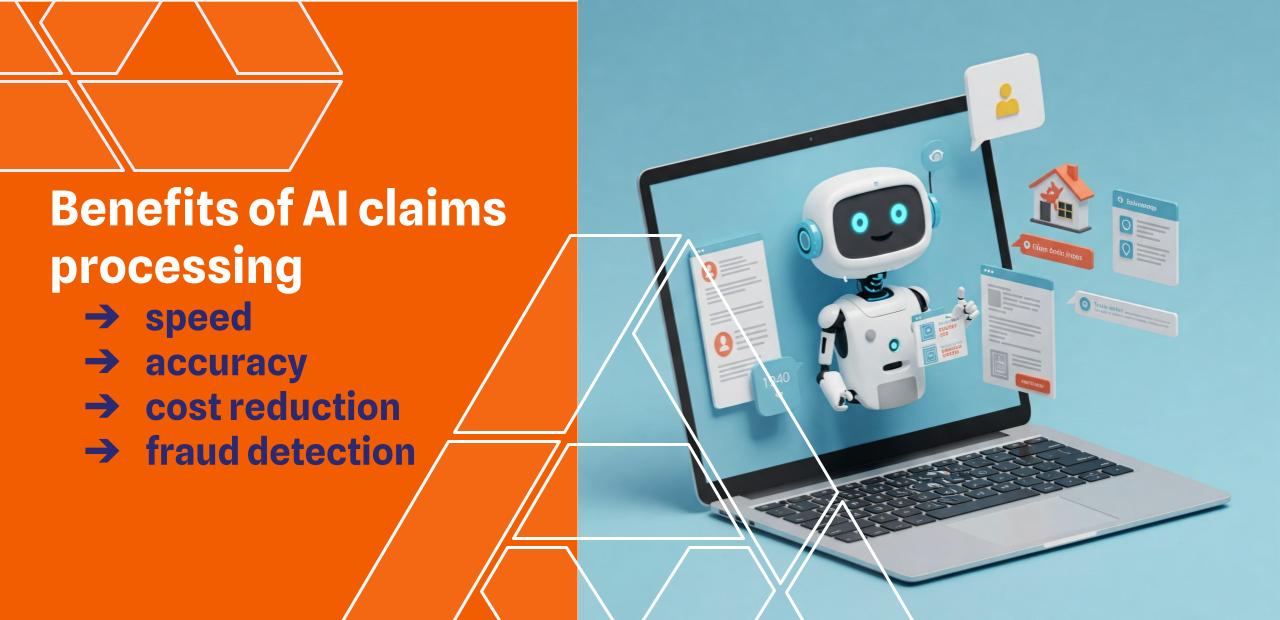
AI is impacting insurance claims by making the entire process faster, more accurate, and more affordable for insurers and policyholders alike. AI claims processing automates document intake, damage assessment, and settlement decisions, dramatically shortening cycle times while reducing manual errors and claims leakage. Insurance claims automation works best when it’s core-embedded rather than bolted on, so every decision draws on live policy and customer data. Some key advantages include:
- Speed: AI can process claims in real-time, reducing the time taken to settle claims significantly.
- Accuracy: By minimizing human error, AI ensures that claims are assessed and settled correctly.
- Cost Reduction: Automating repetitive tasks leads to lower operational costs.
- Fraud Detection: AI systems can analyze patterns and flag suspicious claims, enhancing security.
Examples of AI claims solutions currently in use include:
- Claims Automation Tools: These AI-enabled claims solutions use AI to handle routine claims, allowing human adjusters to focus on more complex cases.
- Predictive Analytics: Tools that assess risks and predict claim outcomes based on historical data.
By implementing these solutions, insurance companies can provide faster and more reliable service to their clients. For instance, ClaimSmart™ from EIS enhances claims processing through intelligent automation and real-time insights. This combination allows insurers to streamline workflows, reduce fraud, and improve customer interactions, maximizing operational efficiency.
Are insurance companies using AI for claims?
The adoption of AI in claims processing is on the rise, with many insurance companies embracing this technology to enhance their operations.
Current trends indicate that a growing number of insurers are integrating AI to speed up claims processing, driven by the need for improved customer experiences and operational efficiencies.
According to a 2025 survey published by Deloitte, 76% of insurance organizations have deployed generative-AI (or GenAI) capabilities in one or more business functions, signaling a strong commitment to modernization. Furthermore, platforms like EIS OneSuite™ enable insurers to quickly adapt to changing market demands and enhance their claims processing capabilities.
Is AI going to replace claims adjusters?
While there is concern about job displacement due to AI advancements, it is essential to analyze the potential for job transformation rather than outright replacement. AI won’t eliminate the role of claims adjusters; instead, it will redefine their responsibilities.
Adjusters will increasingly focus on complex claims that require human judgment and empathy, while AI handles routine assessments. This collaboration between AI and human adjusters enhances overall efficiency, and ensures that customers receive the best possible service.
Will AI take over claims adjusters?
No — AI will not take over claims adjusters. As the technology matures it will absorb more routine assessments, but human oversight, judgment, and empathy remain essential to fair claims outcomes. The future of claims is a partnership: adjusters direct and validate what AI recommends, and insurers stay accountable for every decision made on a policyholder’s behalf.
Ethical considerations surrounding AI usage in claims processing must also be addressed, ensuring that technology complements rather than compromises the human touch.
In conclusion, the integration of AI in claims processing is revolutionizing the insurance industry. By enhancing efficiency, reducing costs, and improving customer experiences, AI is set to play a transformative role in the future of insurance. To explore how our innovative solutions can help your organization leverage AI in claims processing, book a call with one of our experts.