
























 We support and stand by Ukraine in its fight for freedom.
Claims Automation – Use Case
EIS claims automation = serious efficiency + customer satisfaction
Insurers want incredibly efficient operations. But customers want easy filing, efficient processing, and prompt, accurate payouts.
Here’s how to get past complicated integrations, outdated systems, and other claims efficiency roadblocks that get in the way of both of those things.
Complicated integrations, outdated systems, and other claims efficiency roadblocks
A lot of data goes into processing every claim, from internal and external sources. If insurers lack proper data integrations to account for varying formats and dataset structures… redundancies, inaccuracies, and inconsistencies become more likely — and slow down claims.
These integration difficulties — and other common problems, like outdated anti-fraud tools — are often rooted in legacy and modern legacy core systems. These platforms simply weren’t built with today’s technologies in mind, and require claims teams to handle many processes manually or on slow-running systems. This ups the risk of inaccurate payouts, unfair claim denials, and other problems customers won’t tolerate.

Innovations in Automation & Claims SaaS
Cloud-based ClaimCore® and ClaimSmart™ from EIS allow claims teams to set up automated workflows to mitigate or prevent common claims bottlenecks.
For example, auto claim submissions automatically trigger interactions with repair shops and rental agencies, while claims themselves are routed directly to the correct adjusters. Meanwhile, customers receive real-time updates on claim status, so they’re never out of the loop.
ClaimCore and ClaimSmart revolutionize claims automation
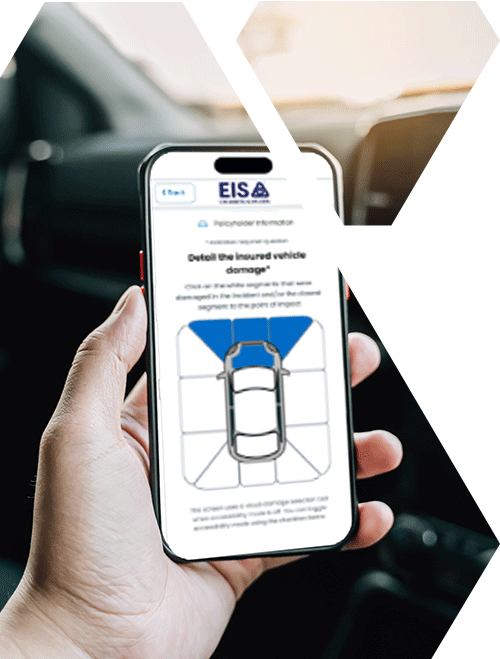

ClaimSmart helps simplify claim filing for customers so they can submit the most accurate information possible from the start, without having to re-enter crucial information later on.
Automated workflows in ClaimCore and ClaimSmart enable end-to-end lifecycle management, directing claims efficiently so routine filings are quickly resolved and complex claims receive proper scrutiny (e.g., for fraud detection or subrogation).
Upon claim resolution, accurate payments are made per policy terms via airtight integration with your policy administration systems.
What customers accomplished with EIS claims technology

Digital Claims Logging

Close Claims Faster

Catching Fraud & Reducing Costs

Q: How does EIS ensure the efficiency of its claims automation process?
A: EIS boosts claims efficiency with ClaimCore’s event-driven automation and ClaimSmart’s AI/ML to reduce manual work and improve fraud detection from FNOL to resolution.
- EIS captures FNOL across channels and automates assignment using configurable rules to speed intake and routing.
- ClaimCore lifecycle management uses dynamic, highly configurable workflows that can skip unnecessary stages to cut cycle time and workload.
- ClaimSmart eliminates redundant manual tasks and adds automation plus smarter decisioning across the claims journey.
- ClaimGuard continuously assesses risk and flags irregularities so adjusters focus on the right claims, faster.
Q: What unique advantages does EIS claims automation offer over competitors?
A: EIS stands out by combining cloud-native, API-first core claims (ClaimCore) with embedded AI/ML (ClaimSmart) on an open, real-time, event-driven platform that gives customers the transparency they crave, and insurers the accuracy and efficiency they need.
- EIS Platform provides an open, event-driven, real-time architecture that removes silos and supports automation across operations.
- ClaimCore supports straight-through automation and rules-based automation, and integrates seamlessly with ClaimSmart for smarter triage and handling.
- Preconfigured components and templates support faster time to market without heavy customization drag.
- Platform-agnostic integration and API support make it easier to connect ecosystems and third-party tools without brittle workarounds.
Q: Can EIS platform be customized for different types of insurance claims?
A: Yes—ClaimCore workflows and rules are highly configurable, and ClaimSmart journeys can be tailored by line of business and use case.
- Its flexible architecture enables insurers to implement specific features that align with their claims processes.
- The platform’s extensive integration capabilities allow for seamless collaboration with external tools, fostering unique operational workflows.
- This ensures that claims management is not only effective but also enhances efficiency in insurance claims automation, adapting to the evolving needs of the industry.
Q: How does EIS support rapid deployment for claims automation?
A: EIS accelerates deployment with preconfigured templates, configuration tooling, and low-code workflow and rules management across the platform.
- Preconfigured components and templates speed delivery and reduce build-from-scratch work.
- Configuration tooling supports quick adjustments to processes and settings, helping teams launch faster with less effort.
- Drag-and-drop workflow builder makes it easier to define, refine, and change workflows as business needs evolve.
- Business rules management supports one-click deployment of rules to keep changes fast and controlled.
Q: What role does AI play in EIS claims automation processes?
A: AI in EIS claims automation speeds decisions and reduces manual work by spotting risk early, guiding the next best action ,and automating routine steps — with human oversight where it matters.
- Predictive triage and continuous risk monitoring help route simple claims for faster resolution, flag potential fraud and leakage as new information arrives, and focus experts on the right exceptions.
- Document and data extraction reduces rekeying by pulling key details from submissions and validating them against policy and claim context.
- ClaimSmart delivers applied claims intelligence (like risk scoring and journey triggers), while CoreGentic functionality operationalizes AI safely at scale so insights can drive governed actions in workflows without locking teams into a single model or approach.
Q: How can EIS enhance the customer experience during the claims process?
A: EIS improves claims CX by combining digital-first intake, real-time status visibility, and personalized communications.
- Customers stay informed with real-time updates and tailored communications, improving transparency and trust. This empowers them to take action when needed, and to see what needs to be done, reducing phone-and-email back-and-forth.
- ClaimCore streamlines multi-channel FNOL capture so claim reporting feels faster and more consistent across touchpoints.
- Case management can tie multiple claims to a single event, supporting smoother coordination and service for complex incidents. (Like combining a short-term disability and hospital indemnity claim for group benefits insurers.)
Q: What types of insurance lines can EIS claims automation support?
A: EIS claims automation supports multiple lines of business, including P&C, life, disability, and other types of insurance, with workflows designed to fit each claim type.
- ClaimCore workflows and rules are designed to support all lines of business and claim types.
- ClaimCore supports multiple claim products on a single platform, using configuration (not custom code) to adapt workflows, rules, and data needs by claim type.
- A shared claims lifecycle and financial engine handles different payment and settlement scenarios consistently, while allowing line-specific nuances through configurable steps and controls.
- Unified case management supports complex events that may span multiple coverages, so teams can coordinate related claims in one place with a consistent process and audit trail.
Q: How does EIS ensure compliance in its claims automation solutions?
A: EIS supports compliance with built-in auditability, security controls, and configurable data handling aligned to regional requirements.
- Business Activity Monitoring (BAM) tracks user activity and changes, providing a comprehensive view for audit and compliance needs.
- Security and activity monitoring include encryption, access controls, and regular security audits and compliance checks.
- Platform capabilities can adapt data storage, processing, and transmission protocols based on policyholder location and regional guidelines.
- Reporting capabilities support ongoing compliance monitoring and produce detailed outputs for internal and external audits.
