




























 We support and stand by Ukraine in its fight for freedom.
AI Enablement for Insurance
In today’s rapidly evolving landscape, AI enablement for insurance isn’t just a trend, it’s a necessity for companies aiming to enhance operational efficiency and customer experience. The integration of AI technologies is transforming the insurance industry, offering new solutions that streamline processes and improve decision-making. This article will dive into the significance of AI enablement, its impact on traditional insurance models, and actionable strategies for implementation.
What does AI enablement mean?
AI enablement refers to the underlying technology that enables integration of artificial intelligence technologies into insurance operations, enhancing various functions such as underwriting, claims processing, and customer service. By leveraging AI for insurance companies, insurers can automate routine tasks, analyze vast amounts of data, and improve risk assessment and management.
Benefits of AI enablement for insurance companies
- Operational Efficiency: AI automates repetitive tasks, allowing staff to focus on higher-value activities. For instance, the cloud-native, API-first, modular EIS OneSuite™ enables rapid deployment and integration, allowing insurers to streamline operations effectively.
- Enhanced Customer Experience: AI-driven virtual assistants provide immediate responses to customer inquiries, improving satisfaction. The integration of agentic AI within core systems facilitates real-time customer interactions, ensuring that inquiries are addressed promptly and accurately.
- Data-Driven Insights: AI technologies enable insurers to analyze data more effectively, leading to better risk assessment and decision-making. With thousands of open APIs, insurers can integrate diverse data sources, enhancing analytical insights and operational efficiency.
- Cost Reduction: By streamlining operations, companies can reduce overhead costs associated with manual processes, saving hours of professional labor expenses.
Incorporating the best AI enablement for insurance can significantly elevate an insurer’s edge against their competitors.
How is AI disrupting the insurance industry?
AI is making waves across several key areas in the insurance sector:
- Underwriting: AI in insurance underwriting examples include predictive analytics that assess risk more accurately than traditional models.
- Claims Processing: Automation speeds up claims handling, enhancing customer satisfaction. EIS claims solutions leverage claims automation and fraud detection technologies to improve profitability and reduce claims leakage, while also driving better customer retention thanks to automated and personalized transparency in the claims process.
- Fraud Detection: AI algorithms analyze patterns to identify potentially fraudulent claims. By embedding AI into the claims management process, insurers can leverage analytical insights to enhance risk management and compliance.
The implications of this disruption challenge traditional insurance models, pushing companies to adapt or risk obsolescence. Insurers must embrace these changes to remain competitive in a market increasingly driven by technology.

How to use AI in the life insurance industry?
Implementing AI in the life insurance sector involves several actionable strategies:
- Customer Segmentation: Utilize AI to analyze customer data for targeted marketing. The cloud-native architecture of EIS allows for real-time data processing, enabling insurers to segment customers more effectively.
- Risk Assessment: Implement predictive models to evaluate potential policyholders more effectively. With the agentic AI capabilities, insurers can automate risk assessments, improving accuracy and speed.
- Claims Automation: Use AI tools to streamline the claims process, reducing turnaround times. Our focus on claims automation not only enhances operational efficiency, but also significantly improves the customer experience.
Specific AI tools and technologies that can be utilized include:
- Natural language processing (NLP) for customer interactions, allowing users to engage with systems using plain language.
- Machine learning algorithms for risk assessment, providing insurers with the ability to adapt to changing market conditions swiftly.
- Robotic process automation (RPA) for claims management, ensuring that processes are handled efficiently, accurately, and within regulatory compliance.
Understanding how to use AI in the insurance industry can empower companies to innovate and enhance operational capabilities. By leveraging platforms like EIS OneSuite™, insurers can not only meet current market demands, but also position themselves for future growth in an increasingly digital landscape.
What is an example of AI in insurance?
A notable case study of an AI application in insurance is the implementation of an AI-driven claims processing system by a leading insurer. This system uses machine learning algorithms to analyze claims data, identify patterns, and flag anomalies for fraud or further investigation.
Outcomes and benefits of this AI implementation:
- Increased Efficiency: The insurer significantly reduced claims processing time.
- Cost Savings: Automation led to a significant decrease in operational costs.
- Improved Customer Satisfaction: Faster claims resolutions resulted in higher customer retention rates.
Examples of AI enablement for insurance like this demonstrate the transformative potential of AI in the industry. The integration of agentic AI within EIS OneSuite™ further enhances these capabilities. By embedding AI directly into core systems, insurers can achieve real-time data processing and decision-making, significantly improving operational efficiency.
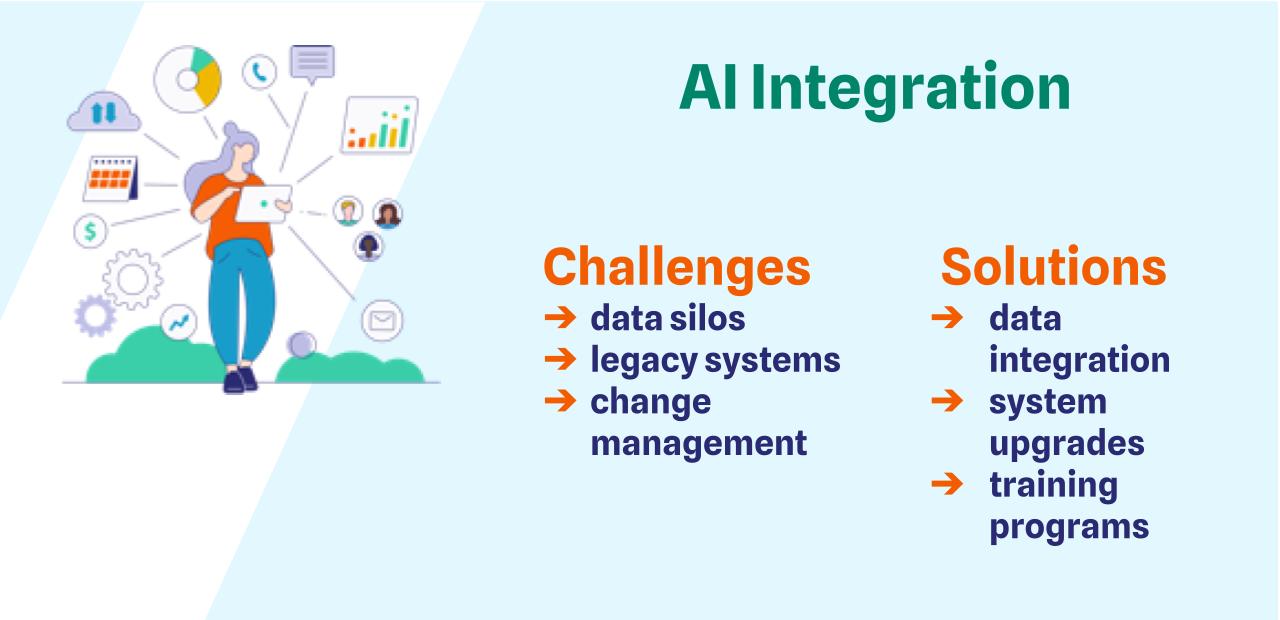
What challenge relates to integrating AI with existing systems?
While the benefits of AI are clear, integrating these technologies with existing systems presents challenges, including:
- Data Silos: Fragmented data across departments can hinder AI effectiveness.
- Legacy Systems: Older systems may not support modern AI technologies, requiring costly upgrades.
- Change Management: Employees may resist transitioning to AI-driven processes.
Potential solutions to overcome these challenges:
- Data Integration: Implement strategies and more modern core systems to unify data sources, ensuring seamless access for AI applications.
- System Upgrades: Invest in modern, cloud-native platforms that support AI integration.
- Training Programs: Provide comprehensive training and a clear vision to staff to ease the transition and increase adoption rates.
Addressing these challenges is crucial for AI enablement for insurance companies to realize the full potential of AI technologies.
Can AI replace brokers?
The role of AI in insurance brokerage is evolving, but it’s unlikely to fully replace human brokers. AI can enhance broker capabilities by providing data-driven insights and automating routine tasks. However, the human touch remains essential in complex negotiations and relationship management.
Limitations of AI compared to human brokers:
- Emotional Intelligence: AI lacks the ability to understand human emotions and nuances in communication.
- Complex Decision-Making: Certain decisions require human judgment that AI cannot replicate.
Thus, while AI will play a significant role in shaping the future of insurance brokerage, it will complement rather than replace human brokers. The integration of AI operationalization tools within platforms like EIS OneSuite™ allows brokers to leverage AI insights and workflows, while maintaining their essential interpersonal skills.
What is the best AI for insurance agents?
Several AI tools and platforms are available for insurance agents, each offering unique features that enhance sales and operational efficiency. Some of the best AI for insurance solutions include:
- Chatbots: Provide 24/7 customer support and lead generation.
- Predictive Analytics Tools: Help agents identify high-potential leads most likely to close, or accounts that need attention to prevent churn.
- Document Automation Software: Streamlines paperwork, allowing agents to focus on client interactions.
These tools exemplify the best AI for insurance sales, enabling agents to operate more effectively in a competitive market. The open connectivity through APIs and the MCP server of EIS OneSuite™ allows for seamless integration of these tools into existing workflows, enhancing overall productivity.
What is one application of AI in the insurance industry?
One specific application of AI in the insurance industry is claims processing. AI systems can automate the assessment of claims, using data from various sources to determine validity, policy thresholds, and expedite approval.
Benefits and efficiencies gained from this application:
- Faster Processing Times: Claims can be processed in real-time, significantly reducing wait times for customers.
- Cost Efficiency: Automation lowers the costs associated with manual claims handling.
- Enhanced Accuracy: AI minimizes human error, leading to more accurate assessments.
Our ClaimSmart™ platform enhancement exemplifies how intelligent automation can streamline claims processing, ensuring that insurers can handle claims efficiently while maintaining high levels of customer satisfaction.