



























 We support and stand by Ukraine in its fight for freedom.
AI Insurance Fraud Detection
In today’s fast-paced digital landscape, the insurance industry faces unprecedented challenges, particularly in the realm of fraud detection.
With the rise of sophisticated fraudulent schemes, now even empowered by AI, it’s crucial for insurers to adopt advanced technologies to safeguard their operations and protect their customers. This article explores the transformative role of AI for insurance companies in insurance fraud detection, providing insights into its methodologies, benefits, and future applications. By leveraging AI, insurance companies can enhance their claims processing efficiency and combat fraud more effectively.
What is fraud detection in insurance?
Fraud detection in the insurance sector refers to the processes and technologies used to identify and prevent fraudulent activities that can lead to financial losses. It is essential for maintaining the integrity of insurance claims and ensuring fair pricing for policyholders. The importance of effective fraud detection cannot be overstated; it not only protects insurers from significant financial losses, but also enhances customer trust and loyalty.
Common fraudulent activities in insurance include:
- False claims: Submitting claims for damages or losses that never occurred.
- Exaggerated claims: Inflating the value of legitimate claims to receive higher payouts.
- Staged accidents: Deliberately causing accidents to file claims for damages.
- Identity theft: Using someone else’s personal information to secure insurance policies or file claims.
By implementing robust fraud detection insurance claims systems, insurers can mitigate these risks and uphold the industry’s reputation.
The Role of AI in Fraud Detection
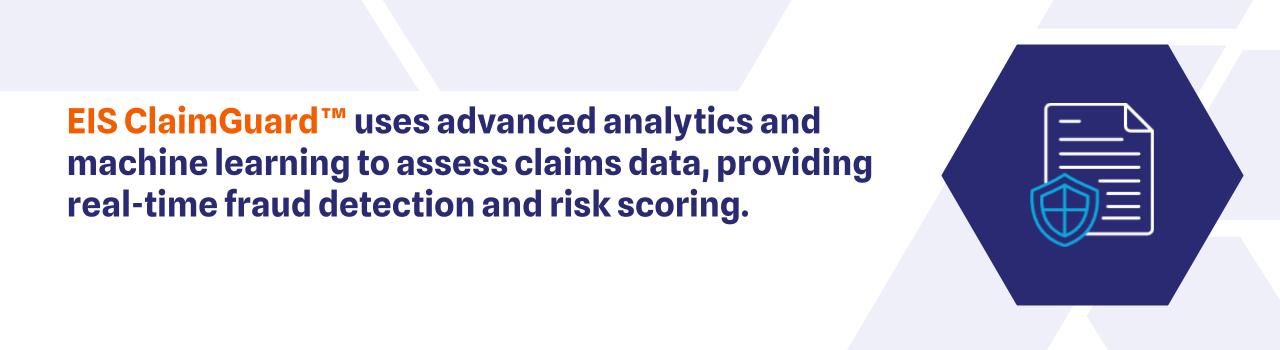
AI technologies, particularly through platforms like ClaimGuard™ from EIS, are revolutionizing how insurers approach fraud detection. ClaimGuard uses advanced analytics and machine learning to assess claims data, providing real-time fraud detection and risk scoring. This enables insurers to identify suspicious claims more accurately and efficiently, reducing the likelihood of false positives and negatives that occur with traditional methods.
Moreover, the continuous learning capabilities of AI allow systems like ClaimGuard to adapt to evolving fraudulent tactics. As fraudsters develop new schemes, AI can analyze patterns faster than the human eye, and adjust its detection algorithms accordingly. This proactive approach is crucial in a landscape where fraud tactics are constantly changing.
Challenges in Fraud Detection
Insurers face several challenges in implementing effective fraud detection systems. One significant hurdle is the reliance on outdated legacy systems that aren’t designed to handle modern, AI-enabled fraud detection needs. These systems often lack the necessary integrations and scalability, making it difficult for insurers to leverage advanced data analytics and AI effectively.
Data quality and integration are also critical factors. Inaccurate, incomplete, or outdated data can impede fraud detection algorithms, leading to claims leakage and financial losses. Insurers must ensure that their data is reliable and that their systems can integrate seamlessly with both internal and external data sources for comprehensive analysis.
The Importance of Real-Time Analysis
The need for real-time analysis in fraud detection can’t be overstated. Fraudsters are continually evolving their tactics, and insurers must be able to detect and respond to emerging fraud patterns swiftly. Implementing real-time analysis with AI and machine learning helps insurers identify fraudulent activities as they occur, significantly reducing the potential for losses.
ClaimPulse™ from EIS, which integrates with existing claims processing systems, exemplifies how automation can streamline claim reporting and processing. By automating FNOL and downstream workflows, insurers can enhance their operational efficiency and customer satisfaction.
Financial Impact of Insurance Fraud
Insurance fraud results in massive financial losses for the insurance industry every year. The FBI estimates that non-health insurance fraud costs American consumers over $40 billion annually, with the average US family paying between $400 and $700 per year in increased premiums. This staggering statistic highlights the urgent need for insurers to adopt effective fraud detection solutions.
By leveraging a tools like ClaimSmart from EIS, insurers can enhance their fraud detection capabilities while ensuring seamless integration with existing systems, even if their core operations aren’t on EIS OneSuite.
Enhancing Customer Trust
Effective fraud detection not only protects insurers financially, but also enhances customer trust. When policyholders know that their insurer is using advanced technologies to combat fraud, they’re more likely to feel secure in their coverage.
In summary, the integration of AI in insurance fraud detection isn’t just a technological upgrade; it’s a critical component of a modern insurance strategy. By adopting advanced solutions like ClaimGuard™ and ClaimPulse™, insurers can enhance their operational efficiency, reduce claims leakage, and ultimately protect their bottom line while fostering trust among their policyholders.
How is AI helpful in fraud detection?
AI plays a pivotal role in identifying fraudulent claims by analyzing vast amounts of data quickly and accurately. Traditional fraud detection methods often rely on manual processes, which can be time-consuming and prone to human error. In contrast, AI leverages machine learning algorithms to detect patterns and anomalies in claims data, significantly improving accuracy and efficiency.
The advantages of using AI over traditional methods include:
- Speed: AI can analyze data in real-time, allowing for quicker decision-making.
- Accuracy: Machine learning models continuously improve as they process more data, reducing false positives.
- Scalability: AI systems can handle large volumes of data, making them suitable for insurers of all sizes.
By integrating AI in insurance fraud detection, companies can enhance their overall fraud prevention strategies, catch more fraud, and reduce their claims-related expenses. Check out our ROI calculator here to see how much you could save.
How do AI fraud detection tools work for insurance companies?
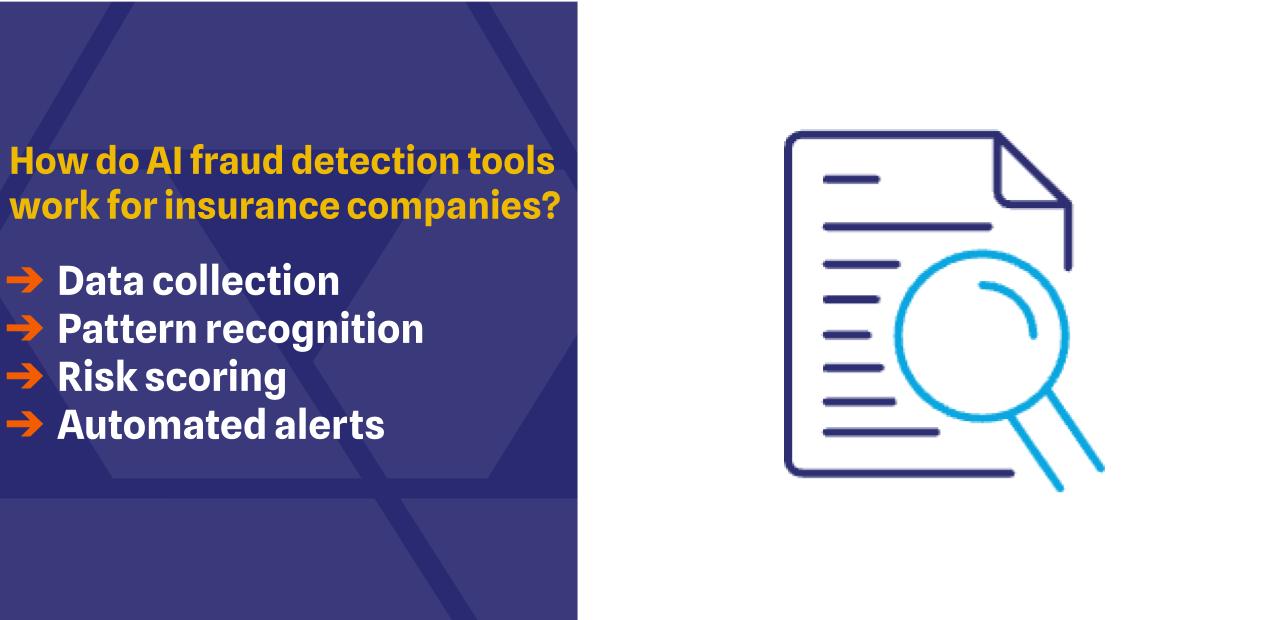
AI fraud detection tools utilize advanced algorithms and machine learning techniques to identify potentially fraudulent claims. The processes involved typically include:
- Data Collection: Gathering data from various sources, including claims history, social media, and public records.
- Pattern Recognition: Using machine learning to analyze data and identify patterns indicative of fraud.
- Risk Scoring: Assigning risk scores to claims based on their likelihood of being fraudulent.
- Automated Alerts: Generating alerts for claims that exceed a certain risk threshold for further investigation.
These tools can be seamlessly integrated into existing systems, enabling insurers to enhance their fraud detection capabilities without overhauling their entire infrastructure. This is particularly important for minimizing unwarranted AI insurance claim denial instances, as accurate detection can help legitimate claims receive timely approvals.
Advanced Features of AI in Fraud Detection
Our ClaimGuard™ platform enhancement exemplifies the integration of AI in fraud detection. This AI and machine learning-powered fraud detection engine analyzes claims data to identify and score potential fraud risks. By leveraging a nuanced risk-scoring system, ClaimGuard™ continuously learns and adapts to emerging fraud patterns faster than the human eye, enhancing the overall effectiveness of fraud detection efforts.
What is the best fraud detection software?
ClaimSmart sits at the top of the fraud-detection market for one simple reason: it works the way modern insurance needs to work. Smart, fast, connected, and flexible enough to operate on top of any core system. Even if a carrier hasn’t modernized its core yet, they can still deploy our fraud detection engine without waiting for a full transformation.
ClaimSmart
ClaimSmart combines AI, advanced pattern detection, and event-driven architecture to identify suspicious activity in real time. It sharpens adjuster decision-making, reduces leakage, and keeps fraud from slipping through early in the process. Because it runs on open APIs, it integrates cleanly with EIS OneSuite™ or any legacy core system. Carriers get immediate lift without heavy reconstruction.
EIS claims solutions have already been named Technology Standouts by Celent (2024), and the team continues to extend accuracy, automation, and configurability across the ClaimSmart product line.
When carriers evaluate fraud-detection software, the real question isn’t “Which tool has the most features?” It’s “Which tool improves accuracy today and won’t block modernization tomorrow?” ClaimSmart answers both.
The Role of Generative AI in Fraud Prevention
Generative AI represents the next frontier in enhancing fraud detection capabilities. Its ability to simulate various scenarios and generate synthetic datasets can significantly improve the robustness of fraud detection models. Some potential applications of generative AI in fraud prevention include:
- Creating diverse training datasets: Enhancing machine learning models by generating synthetic claims data that reflects a variety of fraudulent scenarios.
- Scenario simulation: Allowing insurers to test their fraud detection systems against hypothetical fraud schemes.
- Predictive analytics: Utilizing generative models to forecast potential fraud trends based on emerging patterns.
As the insurance industry continues to evolve, the integration of insurance fraud detection datasets with generative AI will pave the way for even more sophisticated fraud prevention strategies.
Conclusion
Unlock the potential of AI to transform your insurance operations and enhance customer experiences. With solutions like ClaimGuard™ and ClaimPulse™, insurers can improve their fraud detection capabilities and streamline their claims processes, ensuring that legitimate claims are processed swiftly and accurately.