Challenges in Fraud Detection
Insurers face several challenges in implementing effective fraud detection systems. One significant hurdle is the reliance on outdated legacy systems that aren’t designed to handle modern, AI-enabled fraud detection needs. These systems often lack the necessary integrations and scalability, making it difficult for insurers to leverage advanced data analytics and AI effectively.
Data quality and integration are also critical factors. Inaccurate, incomplete, or outdated data can impede fraud detection algorithms, leading to claims leakage and financial losses. Insurers must ensure that their data is reliable and that their systems can integrate seamlessly with both internal and external data sources for comprehensive analysis.
The Importance of Real-Time Analysis
The need for real-time analysis in fraud detection can’t be overstated. Fraudsters are continually evolving their tactics, and insurers must be able to detect and respond to emerging fraud patterns swiftly. Implementing real-time analysis with AI and machine learning helps insurers identify fraudulent activities as they occur, significantly reducing the potential for losses.
ClaimPulse™ from EIS, which integrates with existing claims processing systems, exemplifies how automation can streamline claim reporting and processing. By automating FNOL and downstream workflows, insurers can enhance their operational efficiency and customer satisfaction.
Financial Impact of Insurance Fraud
Insurance fraud results in massive financial losses for the insurance industry every year. The FBI estimates that non-health insurance fraud costs American consumers over $40 billion annually, with the average US family paying between $400 and $700 per year in increased premiums. This staggering statistic highlights the urgent need for insurers to adopt effective fraud detection solutions.
By leveraging a tools like ClaimSmart from EIS, insurers can enhance their fraud detection capabilities while ensuring seamless integration with existing systems, even if their core operations aren’t on EIS OneSuite.
Enhancing Customer Trust
Effective fraud detection not only protects insurers financially, but also enhances customer trust. When policyholders know that their insurer is using advanced technologies to combat fraud, they’re more likely to feel secure in their coverage.
In summary, the integration of AI in insurance fraud detection isn’t just a technological upgrade; it’s a critical component of a modern insurance strategy. By adopting advanced solutions like ClaimGuard™ and ClaimPulse™, insurers can enhance their operational efficiency, reduce claims leakage, and ultimately protect their bottom line while fostering trust among their policyholders.
How is AI helpful in fraud detection?
AI plays a pivotal role in identifying fraudulent claims by analyzing vast amounts of data quickly and accurately. Traditional fraud detection methods often rely on manual processes, which can be time-consuming and prone to human error. In contrast, AI leverages machine learning algorithms to detect patterns and anomalies in claims data, significantly improving accuracy and efficiency.
The advantages of using AI over traditional methods include:
- Speed: AI can analyze data in real-time, allowing for quicker decision-making.
- Accuracy: Machine learning models continuously improve as they process more data, reducing false positives.
- Scalability: AI systems can handle large volumes of data, making them suitable for insurers of all sizes.
By integrating AI in insurance fraud detection, companies can enhance their overall fraud prevention strategies, catch more fraud, and reduce their claims-related expenses. Check out our ROI calculator here to see how much you could save.
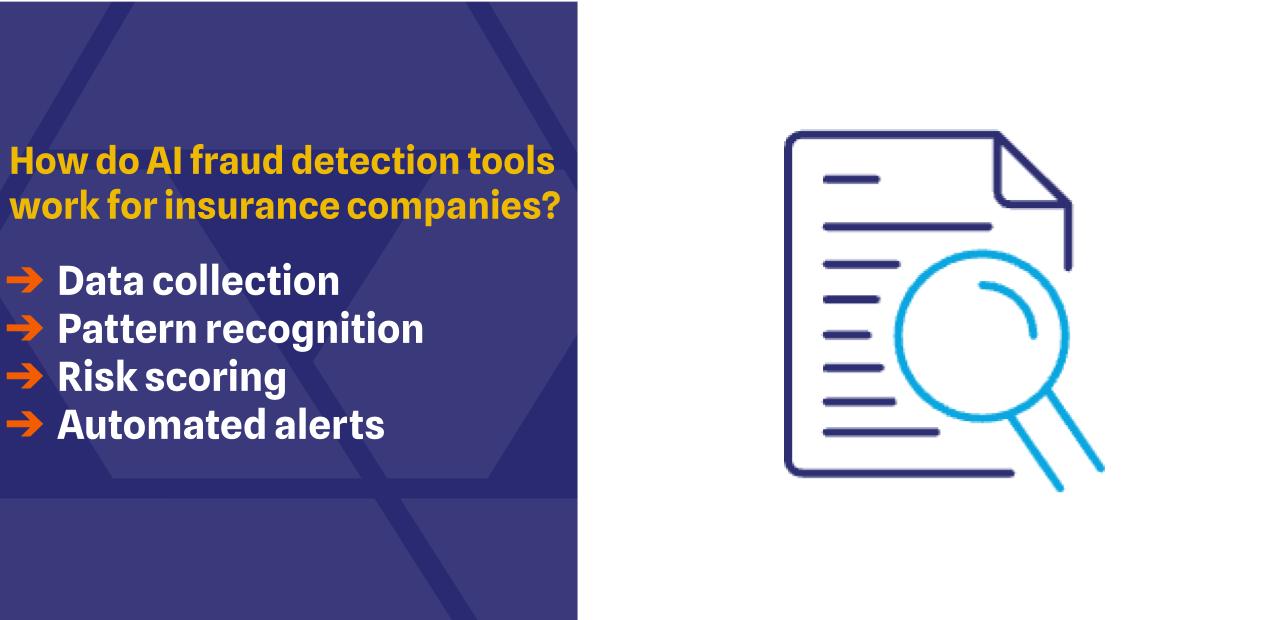
How do AI fraud detection tools work for insurance companies?
AI fraud detection tools utilize advanced algorithms and machine learning techniques to identify potentially fraudulent claims. The processes involved typically include:
- Data Collection: Gathering data from various sources, including claims history, social media, and public records.
- Pattern Recognition: Using machine learning to analyze data and identify patterns indicative of fraud.
- Risk Scoring: Assigning risk scores to claims based on their likelihood of being fraudulent.
- Automated Alerts: Generating alerts for claims that exceed a certain risk threshold for further investigation.
These tools can be seamlessly integrated into existing systems, enabling insurers to enhance their fraud detection capabilities without overhauling their entire infrastructure. This is particularly important for minimizing unwarranted AI insurance claim denial instances, as accurate detection can help legitimate claims receive timely approvals.

























 We support and stand by Ukraine in its fight for freedom.